



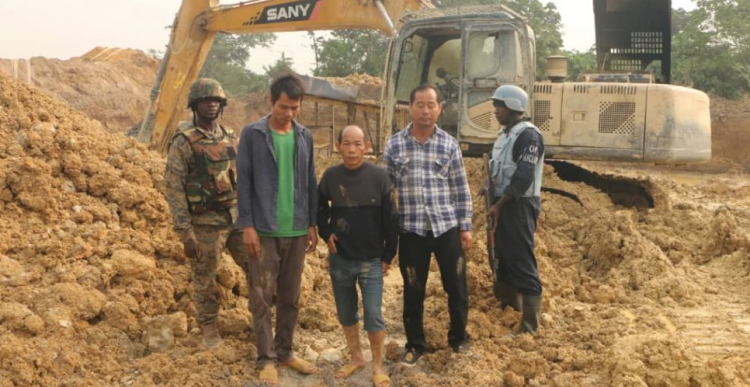
The Coordinator of Eco-Conscious Citizens, Awula Serwah, has strongly criticised the government’s decision to deport foreign nationals caught engaging in illegal mining, commonly known as galamsey, without prosecuting or sentencing them.
Her comments come in response to recent admissions by Deputy Interior Minister Ebenezer Terlarbi, who acknowledged that Ghana’s criminal justice and prison systems are overstretched, making it difficult to prosecute and detain foreign offenders.
In an interview, Madam Serwah described the practice as unjust, ineffective, and dangerously lenient toward environmental crime.
“It’s astonishing that foreigners can enter Ghana, destroy our forests, pollute our rivers, commit ecocide, and instead of facing justice, they are flown home at our expense.
“Meanwhile, Ghanaian citizens who engage in the same acts are tried and jailed. That’s a clear double standard,” she said.
She warned that this approach not only undermines the rule of law but also encourages more foreigners to exploit Ghana’s natural resources with impunity.
“If we acknowledge that illegal mining poses an existential threat to our environment, then justice must be applied equally. Deporting offenders without trial sends the wrong message: that Ghana is soft on environmental crime.”
Madam Serwah called the policy counterproductive, adding that it fails to deter future offenses and could even embolden more illegal activity.
She pointed to the infamous case of Aisha Huang, a Chinese national deported for illegal mining, who later returned to Ghana and resumed her operations.
While acknowledging the strain on Ghana’s prison system, she argued that the solution lies in innovative thinking, not bypassing justice.
“There’s no guarantee deportation ends the threat. The Aisha Huang case proves that. What we need is prosecution, sentencing, and enforcement—not shortcuts that reward environmental destruction. If the prisons are full, let’s find temporary holding solutions. But we must not abandon the law,” she emphasized.